

Chewy rice cakes and savory fish cakes simmered in a rich, sweet, and spicy sauce. This easy tteokbokki recipe is ready in just 20 minutes! I soak the rice cakes in warm water before simmering so they soften evenly without cracking.

Jump to:
Tteokbokki (떡볶이), also called dukbokki, is a popular Korean street food featuring chewy rice cakes simmered in a sweet and spicy gochujang sauce, often with fish cakes and hard-boiled eggs.
It's commonly enjoyed as a snack or side with crispy mandu or gimmari for dipping into the sauce. The name roughly translates to "stir-fried rice cakes," with "tteok" meaning rice cake and "bokki" referring to stir-frying.

I fell in love with this cozy Korean comfort food after seeing it featured in so many Korean dramas! I still remember my first bite being packed with savory flavor but almost unbearably spicy. After making it at home many times, I adjusted the sauce to keep that rich, savory flavor with a more manageable level of heat.
When I make this, I simmer dried kelp in the water to give the sauce a deeper savory flavor. I also simmer the rice cakes uncovered so the sauce naturally thickens into a glossy coating that clings to every piece.
Ingredients & Substitutes
Exact ingredient measurements are in the recipe card below.

- Korean Rice Cakes (Tteok): I recommend refrigerated tubular-shaped rice cakes for their chewy texture. Fresh rice cakes also work without soaking. Frozen rice cakes are more prone to cracking and require a longer soak before cooking.
- Water
- Korean Fish Cake Sheets (Eomuk): Add a savory seafood flavor and tender, slightly springy texture that complements the chewy rice cakes. Find them in the refrigerated or frozen section at Korean grocery stores. Thinly sliced fish balls also work.
- Dried Kelp: Simmer this in water to make a quick umami-rich stock that gives the sauce a deeper savory flavor.
- Green Onions: Add a mild onion flavor that balances the rich sauce.
- Toasted Sesame Seeds: Used for garnishing and adding a nutty flavor. If unavailable, toast raw sesame seeds in a dry pan over medium heat until golden.
Tteokbokki Sauce
- Gochujang: A fermented Korean red chili paste that forms the base of the sauce, giving it its signature spicy, savory, and slightly sweet flavor. Choose a mild variety for less heat or a hot variety if you prefer it spicier.
- Regular Soy Sauce: Adds saltiness and savory depth to balance the sweetness of the sauce. Light soy sauce or low-sodium soy sauce also works.
- White Granulated Sugar: Balances the heat and saltiness of the gochujang for a sweet and spicy sauce. Cane sugar also works.
- Garlic: Fresh garlic is best, but jarred minced garlic also works.
- Gochugaru: Korean red chili flakes that add extra heat and red color to the sauce. I recommend fine gochugaru so it disperses evenly throughout the sauce.
Note: Find the Korean ingredients at Korean or Asian grocery stores.
Expert Tips
- Soak firm rice cakes: Soaking refrigerated or frozen rice cakes in warm water helps them soften evenly and reduces the risk of cracking during cooking.
- Simmer uncovered: Keep the pan uncovered so excess liquid evaporates and the rice cakes release starch, creating a thick, glossy sauce that clings to every piece.
- Stir frequently: Scrape the bottom of the pan as the sauce thickens to prevent the rice cakes from sticking and burning.
- Adjust the spice level: Use mild gochujang and reduce the gochugaru for less heat, or use hot gochujang for a spicier sauce.
- Avoid overcooking: Remove the pan from the heat once the rice cakes are soft and chewy. Simmering too long can make them mushy.
Instructions
Here's how to make spicy tteokbokki:

- Soak the Rice Cakes: Soak refrigerated rice cakes in warm water for 10-15 minutes to soften them and help prevent cracking. Skip soaking if using fresh rice cakes. For frozen rice cakes, soak in warm water for 20-30 minutes or until softened. Drain and set aside.

- Mix the Sauce: In a small bowl, whisk together the tteokbokki sauce ingredients until the gochujang is fully combined. Set aside.

- Prepare the Kelp Stock: Add water and dried kelp to a medium (10-inch) nonstick pan. Cover and bring to a boil over medium-high heat.

- Add the Sauce: Stir the prepared sauce into the boiling kelp stock until evenly combined. Remove the kelp if preferred, or leave it in. Bring back to a boil.

- Simmer the Rice Cakes: Add the drained rice cakes, fish cakes, and green onions. Reduce to medium heat and simmer uncovered for 8-10 minutes, stirring often and scraping the bottom of the pan to prevent sticking. Cook until the rice cakes are soft and chewy and the sauce is thick and glossy.
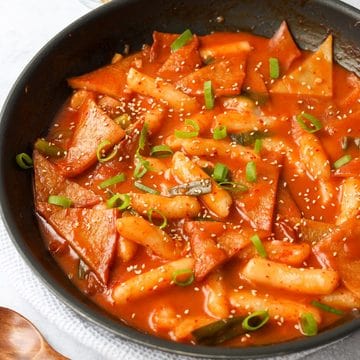
- Garnish and Serve: Remove from the heat, sprinkle with toasted sesame seeds, and serve immediately.
Storage & Reheating
- Refrigerator: Store leftover tteokbokki in an airtight container in the fridge for up to 4 days. The sauce will thicken and the rice cakes will firm up as they cool.
- Freezer: Freezing is not recommended because the rice cakes can become hard and lose their chewy texture.
- Reheating: Microwave in 1-minute intervals, stirring between each interval, until hot. Alternatively, reheat in a pan over medium heat with a splash of water to loosen the sauce and soften the rice cakes.
Variations
- Gluten-Free: Use certified gluten-free rice cakes and gochujang, plus gluten-free soy sauce or tamari. Omit the fish cakes, which often contain wheat, and check that your other ingredients are gluten-free.
- Cheese Tteokbokki: Sprinkle shredded mozzarella over the rice cakes during the last 2 minutes of cooking. Cover the pan briefly until the cheese melts.
FAQ
The rice cakes may need more time to soften. Continue simmering until they're tender and chewy, adding a splash of water if the sauce becomes too thick. Frozen rice cakes may take longer to cook.
This version is milder than traditional spicy tteokbokki, but it still has a noticeable kick. I'd rate the heat around 7 out of 10, depending on the gochujang and gochugaru used.
Tteokbokki is best enjoyed fresh because the rice cakes firm up and the sauce thickens as it cools. You can prepare the sauce and slice the fish cakes and green onions ahead of time, then cook everything just before serving.
More Like This
Check out my other Korean recipes:
📖 Recipe
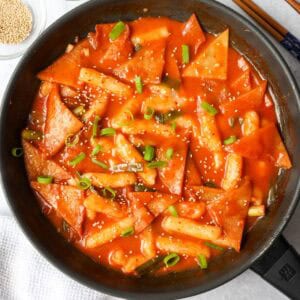
20-Minute Easy Spicy Tteokbokki (Korean Rice Cakes)

Ingredients
- 2 ½ cups Korean rice cakes refrigerated, tubular-shaped preferred
- 2 cups water room temperature
- 1 cup Korean fish cake sheets cut into bite-sized triangles, about 2 inches wide.
- 4 pieces dried kelp
- 2 green onions cut into 1-inch long pieces
- 1 teaspoon sesame seeds toasted kind
Tteokbokki Sauce:
- ½ tablespoon gochujang mild
- 2 tablespoon regular soy sauce or light soy sauce
- 3 tablespoon white granulated sugar
- 2 garlic cloves minced
- 1 teaspoon gochugaru fine Korean red chili flakes
Instructions
- Soak refrigerated rice cakes in warm water for 10-15 minutes to soften them and help prevent cracking. Skip soaking if using fresh rice cakes. For frozen rice cakes, soak in warm water for 20-30 minutes or until softened. Drain and set aside.
- In a small bowl, whisk together the tteokbokki sauce ingredients until the gochujang is fully combined. Set aside.
- Add water and dried kelp to a medium (about 10-inches) nonstick pan. Cover and bring to a boil over medium-high heat.
- Stir the prepared sauce into the boiling kelp stock until evenly combined. Remove the kelp if preferred, or leave it in. Bring back to a boil.
- Add the drained rice cakes, fish cakes, and green onions. Reduce to medium heat and simmer uncovered for 8-10 minutes, stirring often and scraping the bottom of the pan to prevent sticking. Cook until the rice cakes are soft and chewy and the sauce is thick and glossy.
- Remove from the heat, sprinkle with toasted sesame seeds, and serve immediately.

Annie
Came out very good! And the recipe was very easy. More on the sweet side, and a pleasant spice level.
Christie Lai
Thank you so much for the positive feedback and for making my recipe! Glad you enjoyed it!
Alica
This was sooo tasty and I personally did not think it was too spicy. I added a tablespoon of cornstarch with some water at the end to make the sauce a little more thick. Will absolutely make this more often. Thank you!!! Greetings from Germany 🙂
Christie Lai
Thanks so much for making my recipe, Alica! I am so glad it wasn't too spicy and thanks for sharing that note on the added cornstarch. Glad it worked out 🙂
Jd
Yes I did enjoy your Korean seafood pancake recpe