

Silky soft tofu, tender pork belly, tangy kimchi, mushrooms, and egg in a rich, spicy, and savory broth. This easy sundubu jjigae recipe is ready in just 30 minutes! I simmer the broth uncovered to concentrate the flavors, making every spoonful rich and delicious.

Jump to:
Sundubu jjigae (순두부찌개), or soondubu jjigae, is a popular Korean soft tofu stew traditionally served bubbling hot in an earthenware pot with a raw egg cracked into the stew and steamed rice on the side.
It's known for its spicy, savory broth and delicate soft tofu that soaks up the delicious flavors of the broth. Popular variations feature pork, beef, seafood, or kimchi.
I've made this comforting stew countless times after adapting it from my pork kimchi stew recipe. It's one of my favorite meals to enjoy on a cold day!

When I make this for lunch or dinner, I render the pork belly fat before adding the stock to give the broth a richer, savory flavor. I also sauté well-fermented kimchi until it releases its juices, bringing more tangy, savory flavor into the broth.
Ingredients & Substitutes
Exact ingredient measurements are in the recipe card below.

- Soon Tofu (Soft Tofu): I recommend Korean soon tofu for its delicate, silky texture. It's sold in clear plastic tubes at Korean grocery stores. Soft or silken tofu sold in rectangular containers also works, but avoid medium or firm tofu for the traditional soft texture.
- Pork Belly: Adds richness and savory flavor as the fat renders. Pork shoulder also works, but the broth will be less rich.
- Kimchi: Use well-fermented napa cabbage kimchi for its tangy flavor. Look for softer, darker red cabbage with plenty of kimchi juice.
- Enoki Mushrooms: I recommend enoki mushrooms for their delicate texture. Thinly sliced button mushrooms or seafood mushrooms also work.
- Anchovy Stock: Use homemade anchovy stock or prepare 1.5 cups (375 ml) of stock using anchovy stock tablets according to package instructions. Dashi stock or low-sodium chicken stock also works.
- Kimchi Juice: Use the liquid from your kimchi jar or package for extra tangy flavor.
- Onion: Adds natural sweetness and savory flavor to the broth as it cooks.
- Garlic Cloves: Add a fragrant, garlicky flavor to the stew.
- Regular Soy Sauce: Light soy sauce or low-sodium soy sauce also works.
- Fish Sauce: Adds savory depth to the broth.
- Toasted Sesame Oil: Adds a rich, nutty flavor to the stew.
- White Granulated Sugar: Balances the tanginess of the fermented kimchi.
- Gochugaru: I recommend finely ground Korean red chili flakes because they distribute evenly throughout the broth, giving it a rich red color and spicy flavor.
- Egg: Adds richness to the stew, especially when the yolk mixes into the spicy broth.
- Green Onion
- Cooked Short-Grain Rice: For serving with the stew.
Note: Find the Korean ingredients at your local Asian grocery store or in the international aisle of larger supermarkets.
Expert Tips
- Simmer gently after adding tofu: Avoid vigorous boiling or excessive stirring so the delicate tofu pieces don't break apart.
- Avoid overcooking the mushrooms: Add the enoki mushrooms near the end and simmer for just 1 minute to preserve their delicate texture.
- Cut kimchi with kitchen scissors: Snip the kimchi directly in a bowl to avoid staining your cutting board with red kimchi juice.
Instructions
Here's how to make sundubu jjigae:
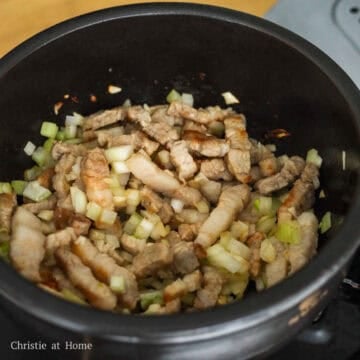
- Cook the pork belly and aromatics: Heat a pot or a medium Korean earthenware pot over medium heat. Add the pork belly and cook for about 2 minutes until the fat renders. Add the onion and garlic and sauté until fragrant, about 15 seconds.
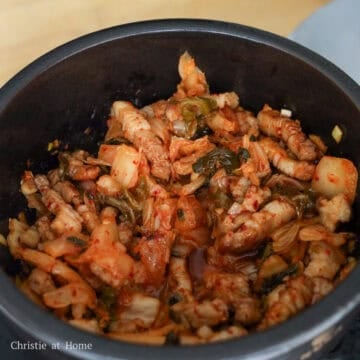
- Add the seasonings and kimchi: Add the soy sauce, fish sauce, toasted sesame oil, sugar, and gochugaru. Stir-fry for about 1-2 minutes until the onions become translucent. Add the kimchi and cook for 1-2 minutes until it releases its juices.

- Simmer the broth: Pour in the anchovy stock and kimchi juice. Cover and bring to a boil over medium-high heat. Remove the lid, reduce to medium heat, and simmer uncovered for 15-20 minutes, stirring occasionally. Taste the broth at 15 minutes and continue simmering for up to 5 more minutes if the flavor needs to concentrate further.

- Add the tofu: Gently add the soon tofu to the center of the pot and break it into large pieces.
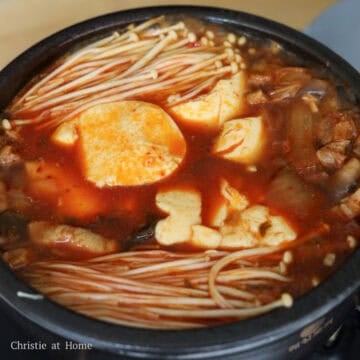
- Add the mushrooms: Place the enoki mushrooms beside the tofu and simmer for 1 minute.
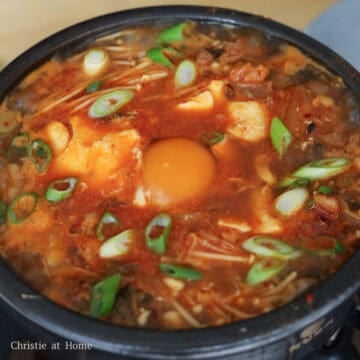
- Add the egg and serve: Crack the egg into the center of the pot on top of the tofu. Simmer for about 1 minute for a soft, runny egg, or longer until the egg reaches your preferred doneness. Remove from the heat, using oven mitts if using an earthenware pot. Garnish with green onion and serve immediately with cooked short-grain rice.
Storage & Reheating
- Refrigerator: Store leftovers in an airtight container in the fridge for up to 3-4 days. The tofu and mushrooms will soften over time.
- Freezer: I don't recommend freezing this stew because the soft tofu can become grainy and lose its delicate texture when thawed.
- Reheating: Reheat in a small pot over medium-low heat until hot, stirring gently to avoid breaking the tofu. Alternatively, microwave in 1-minute intervals until heated through.
Pairing Suggestions
Serve sundubu jjigae with:
- Steamed Rice: Fluffy steamed short-grain rice to balance the spicy, savory broth.
- Korean Rolled Omelette (Gyeran Mari): A soft, savory egg dish for a comforting Korean-style meal.
- Korean Bean Sprout Salad (Sukju Namul): A light, crunchy side dish that contrasts with the rich, spicy stew.
FAQ
Reduce the amount of gochugaru or omit it entirely for a milder stew. Keep in mind that the kimchi may still add some heat.
Yes! A regular pot works well. Korean earthenware pots retain heat and keep the stew bubbling hot when served, but they're not essential.
Use gluten-free soy sauce or tamari, and check that your fish sauce, anchovy stock, and kimchi are gluten-free. Always check packaged ingredient labels, as some brands may contain gluten.
📖 Recipe

Easy Sundubu Jjigae (Korean Soft Tofu Stew)

Ingredients
- 11 oz soon tofu (soft tofu)
- ½ cup pork belly cut into ½-inch cubes
- ½ cup kimchi chopped
- ½ cup enoki mushrooms ends trimmed and rinsed
- 1.5 cup anchovy stock or dashi stock
- 2 tablespoon kimchi juice
- ¼ cup onion finely diced
- 2 garlic cloves minced
- 2 teaspoon regular soy sauce or light soy sauce
- 2 teaspoon fish sauce
- 2 teaspoon sesame oil toasted kind
- 1 teaspoon white granulated sugar
- ½ teaspoon gochugaru
- 1 egg
- 1 green onion finely chopped
- 1.5 cups cooked short grain rice hot
Instructions
- Heat a pot or a medium Korean earthenware pot over medium heat. Add the pork belly and cook for about 2 minutes until the fat renders. Add the onion and garlic and sauté until fragrant, about 15 seconds.
- Add the soy sauce, fish sauce, toasted sesame oil, sugar, and gochugaru. Stir-fry for about 1-2 minutes until the onions become translucent. Add the kimchi and cook for 1-2 minutes until it releases its juices.
- Pour in the anchovy stock and kimchi juice. Cover and bring to a boil over medium-high heat. Remove the lid, reduce to medium heat, and simmer uncovered for 15-20 minutes, stirring occasionally. Taste the broth at 15 minutes and continue simmering for up to 5 more minutes if the flavor needs to concentrate further.
- Gently add the soon tofu to the center of the pot and break it into large pieces.
- Place the enoki mushrooms beside the tofu and simmer for 1 minute.
- Crack the egg into the center of the pot on top of the tofu. Simmer for about 1 minute for a soft, runny egg, or longer until the egg reaches your preferred doneness.
- Remove from the heat, using oven mitts if using an earthenware pot. Garnish with green onion and serve immediately with cooked short-grain rice.



Christina Bettannella
Amazing recipe, such a delicious meal. This is our new winter family fave. We sourced the pork belly from a local farm and butcher, it was divine.
Christie Lai
Thanks so much for making my recipe, Christina! So glad you enjoyed it and it's a new family fave!
Sam
This was so easy to make and delicious! Husband and son said too much enoki but the rest was good. (I love enoki, so it was perfect) Thank you for sharing this recipe 🙂
Christie Lai
Thanks so much for making it, Sam! So glad you enjoyed it with the enoki!
Denise
Very simple and easy, thank you for the recipe!
Christie Lai
Thank you so much for making my recipe and for the positive review, Denise! I'm so happy it was simple and easy!