

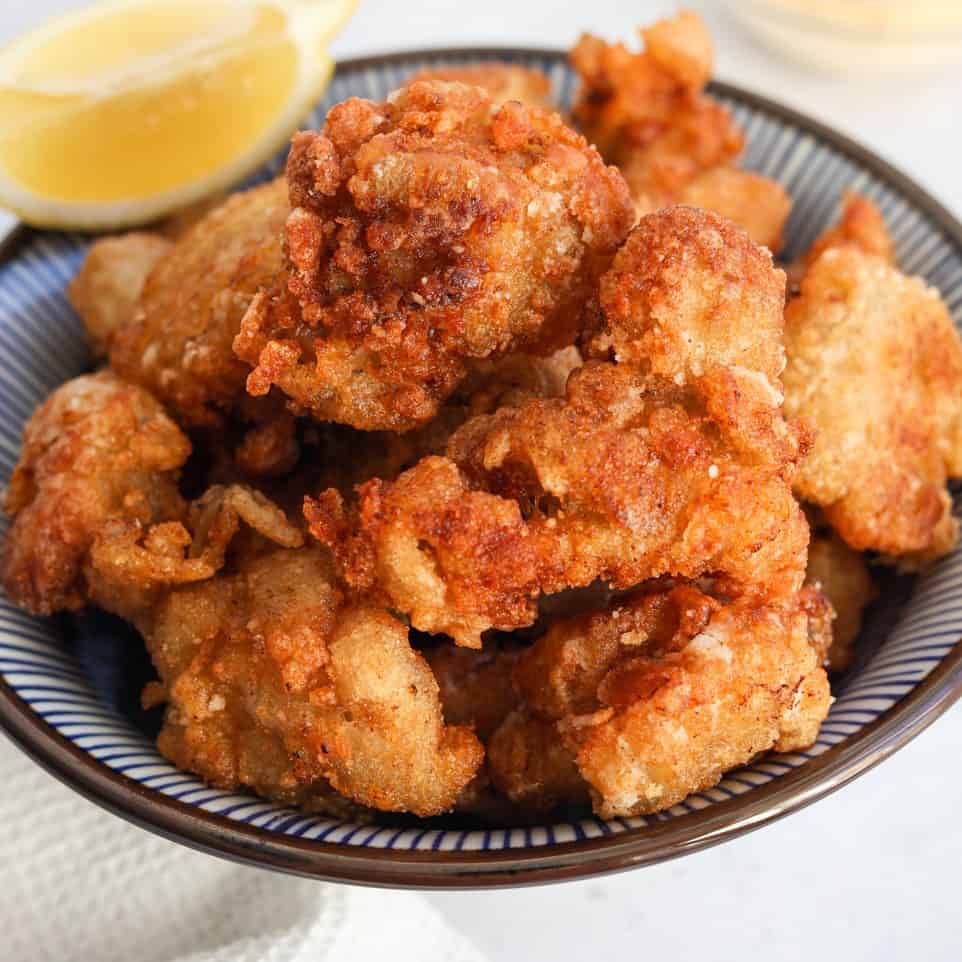
Juicy, bite-sized chicken thighs are marinated in a savory soy-ginger sauce, then fried until golden and extra crispy. This easy karaage recipe makes flavorful Japanese fried chicken that's crispy outside and tender and juicy inside. Enjoy it as a main dish, appetizer, or snack.
Jump to:
Karaage is a popular Japanese dish featuring bite-sized pieces of seasoned chicken coated in starch and deep-fried until crispy. It's commonly served at Japanese restaurants as a starter with a creamy mayo dipping sauce or sold at Japanese convenience stores in the hot foods section or the refrigerated section for reheating.
Japanese fried chicken is one of my favorite ways to enjoy chicken because the crispy coating contrasts so well with the juicy, flavorful meat. I especially love it with a squeeze of fresh lemon juice and Kewpie mayo.
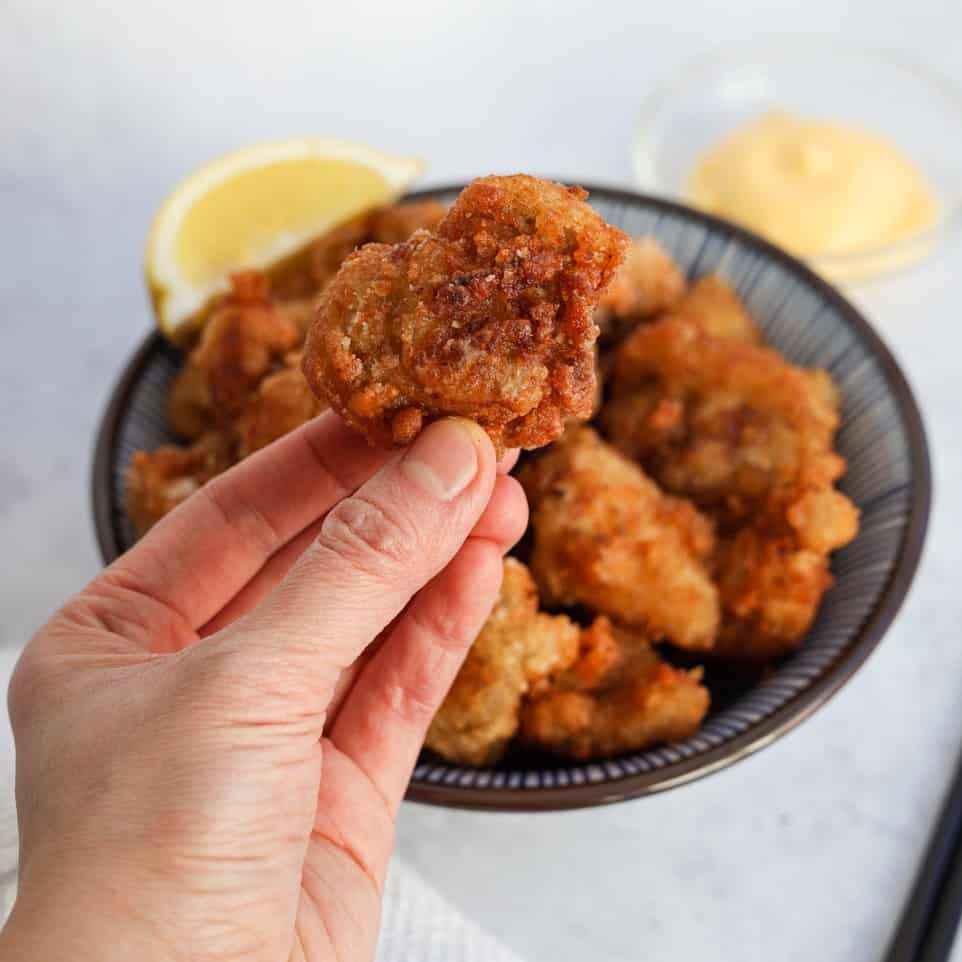
I've found that letting the potato starch-coated chicken rest for 10-15 minutes before frying helps prevent a powdery white coating. This gives the starch time to absorb some of the chicken's surface moisture before it hits the hot oil.
Ingredients & Substitutes
Exact ingredient amounts are listed in the recipe card at the bottom of this page.
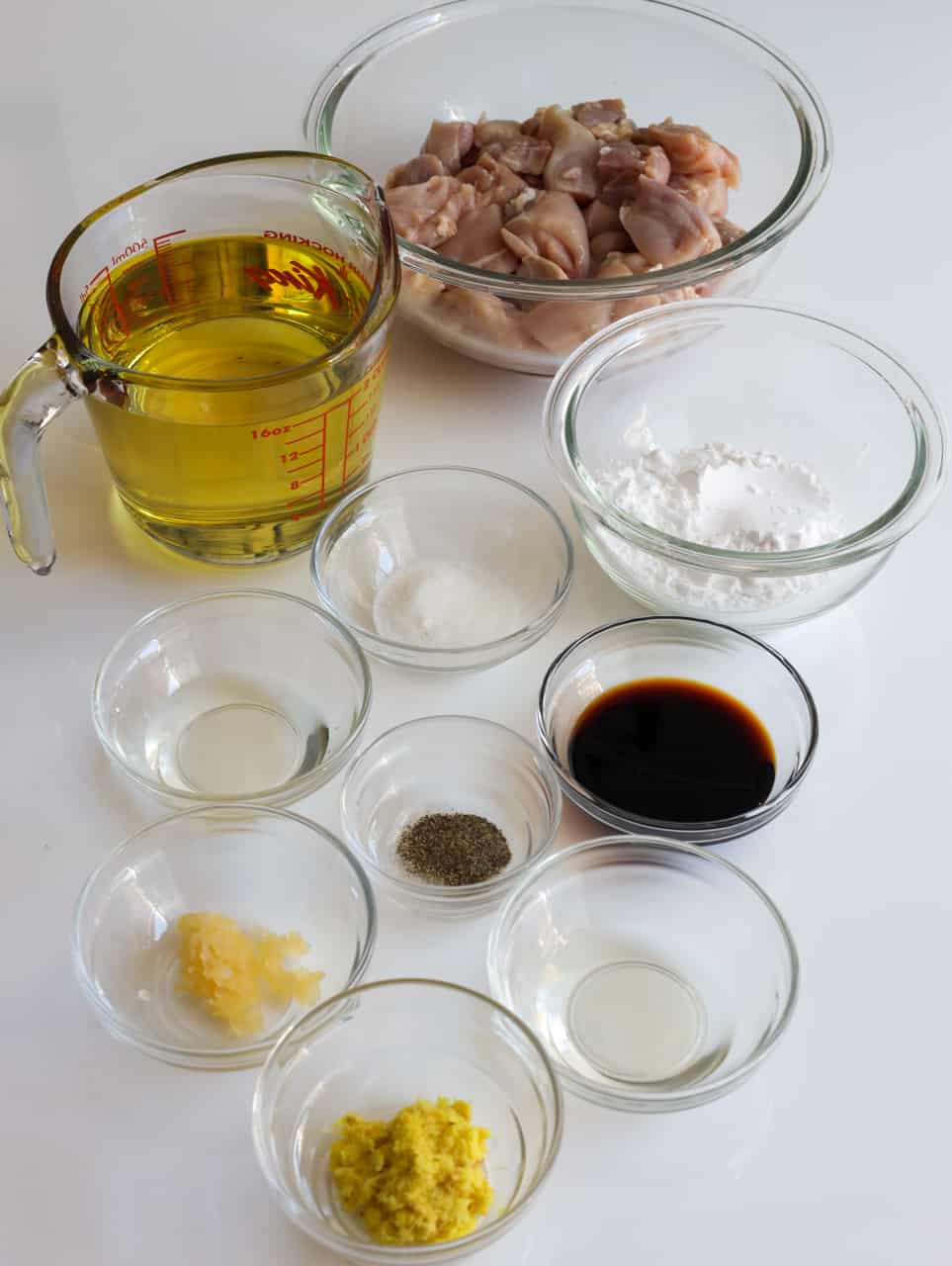
- Boneless Chicken Thighs: I recommend chicken thighs because the dark meat stays juicy when deep-fried. Skin-on boneless thighs work especially well if you can find them.
- Vegetable Oil: Or use any neutral cooking oil with a high smoke point, such as canola or refined avocado oil.
- Potato Starch: This creates the light, crispy coating characteristic of karaage. Cornstarch also works, but potato starch gives the best crispy texture. Avoid all-purpose flour, which creates a heavier coating.
- Lemon Wedges: For squeezing over the fried chicken before serving.
- Japanese Mayo: To serve with the fried chicken as a simple dipping sauce. I prefer Kewpie mayo for its creamy, rich texture and flavor, but regular mayonnaise also works.
Chicken Marinade
- Sake: Dry sherry or Shaoxing wine also works in a pinch.
- White Granulated Sugar
- Mirin: A sweet rice wine commonly used in Japanese cooking. For an alcohol-free option, substitute it with 1 tablespoon water and 1 teaspoon of sugar.
- Regular Soy Sauce: Light soy sauce also works. For a less salty option, use low-sodium soy sauce. Avoid dark soy sauce because it's thicker and can make the marinade and coating too dark.
- Garlic: Use fresh minced garlic for the best flavor, but jarred minced garlic works too.
- Ginger: Fresh ginger adds a warm, aromatic flavor and helps reduce any unwanted odors from the chicken.
- Black Pepper: White pepper also works.
Note: Asian ingredients are typically available at most Asian grocery stores or online.
Expert Tips
- Cut even-sized chicken pieces: This helps the chicken cook through at the same rate.
- Dredge a few pieces at a time: This prevents the potato starch from becoming too moist.
- Rest the coated chicken: Let it sit for 10-15 minutes so the starch absorbs surface moisture and doesn't remain powdery after frying.
- Keep the oil at 350°F: Let the temperature recover between batches for crispy chicken.
- Don't overcrowd the pot: Too much chicken at once will quickly lower the oil temperature.
Instructions
Below are step-by-step instructions on how to make karaage:
- Cut the chicken: Dice the chicken thighs into even 1.5-inch bite-sized cubes. If using skin-on thighs, leave the skin on. Transfer the chicken to a large mixing bowl.
- Marinate the chicken: Add all the marinade ingredients to the chicken and massage until evenly coated. Marinate for 15 minutes at room temperature.
- Coat the chicken: Add the potato starch to a separate large bowl. Working a few pieces at a time, dredge the marinated chicken in the potato starch until evenly coated, then shake off any excess. Transfer to a parchment-lined baking sheet in a single layer and let the coated chicken rest for 10-15 minutes.
- Heat the oil: Add enough vegetable oil to a heavy-bottomed pot to reach 2 inches deep. Heat over medium-high heat to 350°F using an instant-read or deep-fry thermometer. If you don't have a thermometer, insert a wooden chopstick into the oil; steady bubbles forming around it indicate the oil is hot enough for frying.
- Fry the chicken: Working in small batches, carefully add the chicken in a single layer without overcrowding the pot. Fry for 3-4 minutes, flipping halfway through, until golden and crispy and the chicken reaches an internal temperature of 165°F.
- Drain the chicken: Remove the karaage with a slotted spoon and transfer it to a wire rack to drain. Remove any browned bits from the oil and let it return to 350°F before frying the next batch.
- Serve: Squeeze fresh lemon juice over the hot karaage and serve with Japanese mayo for dipping.
Storage & Reheating
- Refrigerator: Store cooled karaage in an airtight container in the refrigerator for up to 4 days.
- Freezer: Freeze cooled karaage in a single layer on a parchment-lined baking sheet until solid, then transfer to a freezer-safe bag and freeze for up to 3 months. Reheat directly from frozen.
- Reheating: For refrigerated karaage, air fry at 375°F for 5-6 minutes or bake at 350°F for 5-10 minutes until hot and crispy. For frozen karaage, reheat directly from frozen using the same method, adding more time as needed until heated through and crispy.
Pairing Suggestions
Serve crispy karaage with:
- Steamed White Rice: A simple base for the savory chicken.
- Japanese Crab Corn Salad: Adds a fresh, creamy side.
- Miso Soup: Adds a warm, savory broth.
FAQ
The oil may be below 350°F or the pot may be overcrowded. Let the oil return to 350°F between batches and fry the chicken in small batches.
Excess dry potato starch can remain white after frying. Let the coated chicken rest for 10-15 minutes to absorb surface moisture and shake off any excess starch before frying.
Yes, but chicken thighs are better because they stay juicier when deep-fried. If using chicken breast, cut it into even bite-sized pieces and cook until it reaches an internal temperature of 165°F.
More Like This
Check out my other fried chicken recipes:
📖 Recipe

Easy Karaage (Japanese Fried Chicken)

Ingredients
- 1 lb skinless boneless chicken thighs or skin-on boneless thighs
- vegetable oil or any neutral oil
- 1 cup potato starch or cornstarch
- lemon wedges for squeezing over the fried chicken
- ⅓ cup Japanese mayo for dipping
Chicken Marinade
- 1 tablespoon sake
- 1 teaspoon white granulated sugar
- 1 tablespoon mirin
- 2 tablespoon regular soy sauce or light soy sauce
- 1 tablespoon ginger grated
- 1 teaspoon garlic grated
- ¼ teaspoon black pepper
Instructions
- Dice the chicken thighs into even 1.5-inch bite-sized cubes. If using skin-on thighs, leave the skin on. Transfer the chicken to a large mixing bowl.
- Add all the marinade ingredients to the chicken and massage until evenly coated. Marinate for 15 minutes at room temperature.
- Add the potato starch to a separate large bowl. Working a few pieces at a time, dredge the marinated chicken in the potato starch until evenly coated, then shake off any excess. Transfer to a parchment-lined baking sheet in a single layer and let the coated chicken rest for 10-15 minutes.
- Add enough vegetable oil to a heavy-bottomed pot to reach 2 inches deep. Heat over medium-high heat to 350°F using an instant-read or deep-fry thermometer. If you don't have a thermometer, insert a wooden chopstick into the oil; steady bubbles forming around it indicate the oil is hot enough for frying.
- Working in small batches, carefully add the chicken in a single layer without overcrowding the pot. Fry for 3-4 minutes, flipping halfway through, until golden and crispy and the chicken reaches an internal temperature of 165°F.
- Remove the karaage with a slotted spoon and transfer it to a wire rack to drain. Remove any browned bits from the oil and let it return to 350°F before frying the next batch.
- Squeeze fresh lemon juice over the hot karaage and serve with Japanese mayo for dipping.
Kay
So yummy! I marinated while prepping my vegetables, and then was good to go - I used Korean fried pancake flour (it has a number of ingredients including cornstarch) and they were lovely. Thank you for sharing your recipe.
christieathome
Thank you so much for making my recipe and for sharing your positive review with me, Kay! I am so glad you enjoyed it with the substitution. That sounds like a great idea 🙂
Nedler
I will try it
christieathome
Thanks and I hope you enjoy it!
Amanda
this was so crispy and delicious! I can't wait to make it again! Easy recipe to follow.