

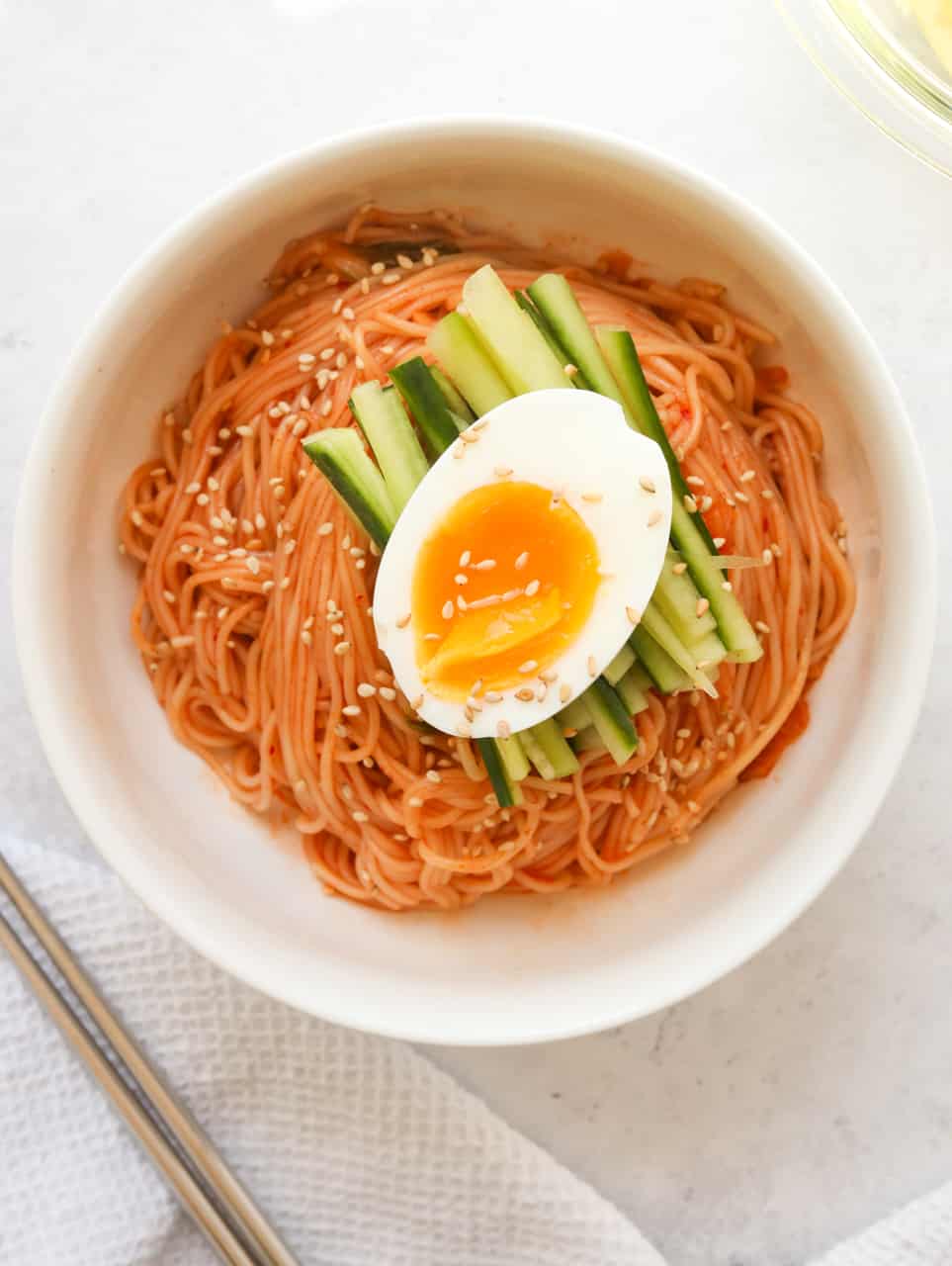
Chewy, chilled Korean noodles tossed in a spicy, tangy, and sweet kimchi sauce with fresh cucumbers and a soft-boiled egg. This easy kimchi bibim guksu recipe is ready in just 10 minutes!
Jump to:
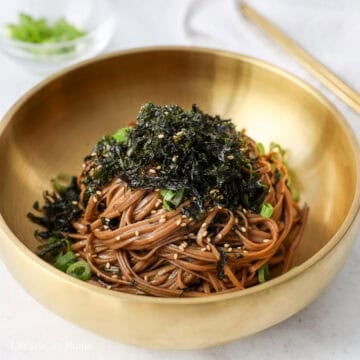
Bibim guksu is a popular Korean cold noodle dish commonly enjoyed during the hot summer months. In Korean, "bibim" means "mixed" and "guksu" means "noodles." This version features kimchi for extra tanginess and flavor.
There's also a non-spicy version called ganjang bibim guksu, made with a soy sauce-based dressing instead of kimchi.
I love making these refreshing noodles on hot summer days when I don't feel like spending much time in the kitchen. They're quick, satisfying, and require very little cooking!
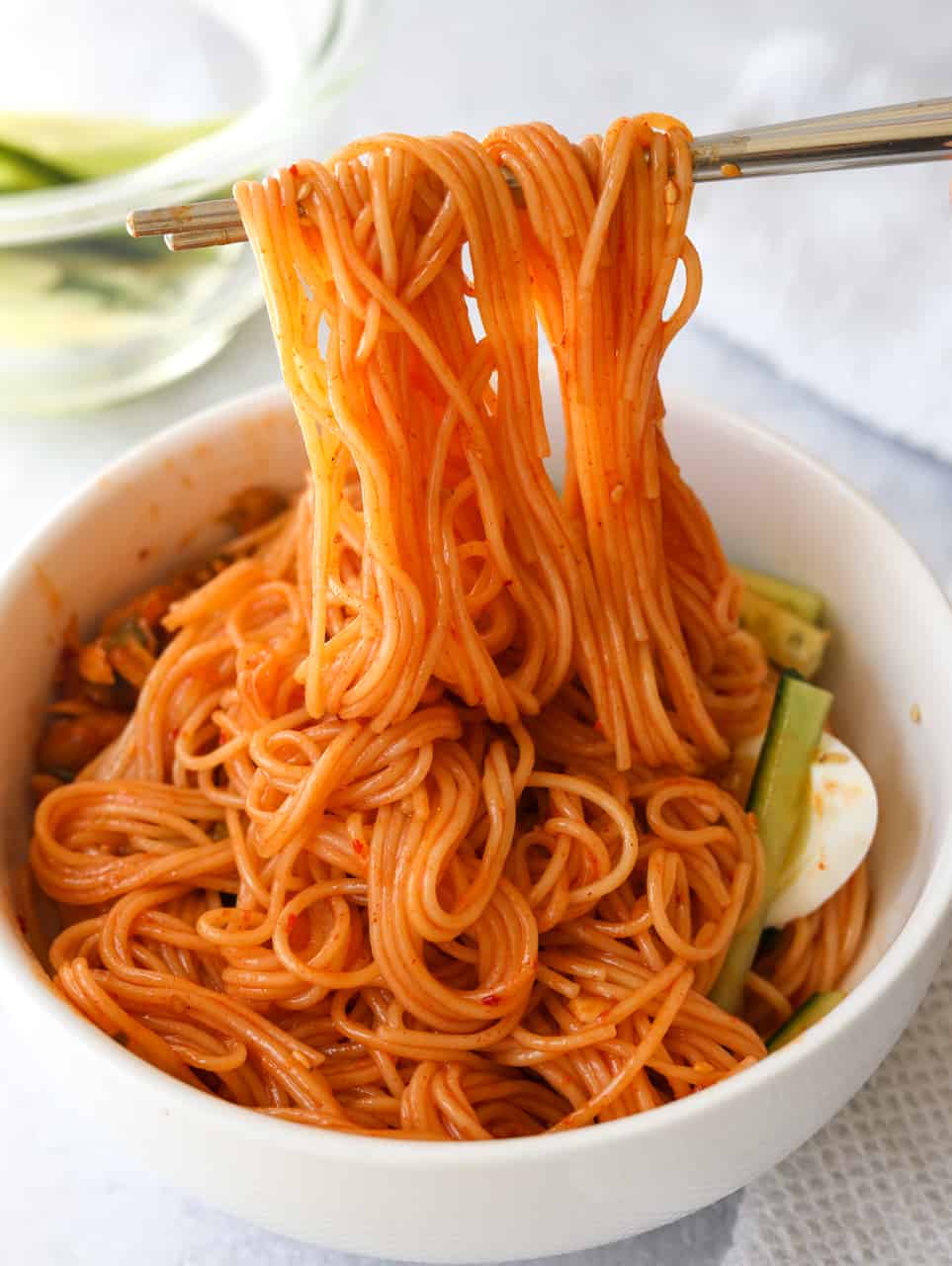
When I make this dish for lunch or dinner, I gently rub the noodles under cold water to remove excess starch and keep them from sticking together. I also drain them really well before tossing them with the sauce so the dressing doesn't become watery.
Ingredients & Substitutes
Exact ingredient measurements are in the recipe card below.

- Somyeon Noodles: These are dried Korean wheat noodles about 1 mm thick with a delicate, chewy texture. Thin Japanese somen noodles also work.
- Cucumber: Adds a refreshing crunch that balances the spicy sauce.
- Large Egg: The creamy yolk adds richness to the noodles and helps balance the spicy kimchi sauce.
Noodle Sauce
- Kimchi: I recommend using well-fermented, tangy kimchi for a more flavorful sauce. Fresh kimchi won't have the same tanginess.
- Regular Soy Sauce: Adds savory flavor to the sauce. Light soy sauce also works, or use low-sodium soy sauce for a less salty taste.
- Toasted Sesame Oil: Adds a rich, nutty flavor to the sauce.
- Rice Vinegar: Adds acidity to balance the sweetness and spice. White vinegar also works.
- Gochujang Paste: A Korean fermented red chili paste that gives the sauce its spicy, savory, and slightly sweet flavor. I prefer mild gochujang, but you can use hot gochujang if you prefer it extra spicy.
- White Granulated Sugar: Balances the tanginess of the kimchi and vinegar. Honey also works.
- Garlic: Use freshly minced garlic for its sharp, aromatic flavor. Avoid jarred minced garlic, which has a different flavor.
- Toasted Sesame Seeds: Add a nutty flavor. If unavailable, toast raw sesame seeds in a dry pan over low heat until fragrant.
Note: Find the Korean ingredients at your local Korean grocery store or in the international aisle of larger supermarkets.
Expert Tips
- Don't overcook the noodles: Somyeon noodles cook quickly, so taste one at the 2-minute mark. They should be tender but still chewy.
- Cut the kimchi with scissors: Use clean kitchen scissors to cut the kimchi directly in the mixing bowl to avoid staining your cutting board. This also saves cleanup.
- Adjust the sauce to taste: Kimchi varies in tanginess and saltiness, so taste the sauce before adding the noodles. Adjust the sugar or vinegar as needed.
- Serve the noodles immediately: Enjoy them right after mixing for the best chewy texture before they soften in the sauce.
- Optional egg-boiling tip: Add 1 teaspoon salt and 2 teaspoon vinegar to the boiling water to help the egg whites set if the shell cracks.
- Peel the egg with a spoon: Gently use the back of a spoon to loosen the cracked shell, starting at the wider end of the egg, to avoid damaging the delicate egg whites.
Instructions
Below are instructions on how to make bibim guksu:

- Prepare the noodle sauce: Add the kimchi to a large mixing bowl and cut it into small pieces using clean kitchen scissors. Add the remaining noodle sauce ingredients and mix well until the gochujang is evenly distributed. Set aside.

- Boil the egg: Bring a small pot of water to a boil over medium-high heat. Gently lower the egg into the boiling water. Cover and reduce to medium heat if needed to maintain a gentle boil. Cook for 6 1⁄2 minutes for a soft-boiled egg, 8 minutes for a soft-jammy egg, or 10 minutes for a hard-boiled egg.

- Cool and peel the egg: Immediately transfer the egg to an ice bath for 5-10 minutes, or until completely cooled. Gently crack the shell and peel, starting at the wider end. Rinse under cold running water to remove any shell fragments. Slice the egg in half and set aside.

- Cook the noodles: Bring a medium pot of water to a boil over high heat. Add the somyeon noodles, stirring occasionally, and cook for 2-3 minutes until tender and chewy. Taste a noodle at the 2-minute mark to avoid overcooking. If the water begins to overflow, reduce the heat slightly or add a splash of cold water.

- Rinse and drain the noodles: Drain the noodles in a fine-mesh strainer and rinse under cold running water until completely chilled. Gently rub the noodles with your hands to remove excess starch, then shake off as much water as possible.

- Mix and serve: Add the drained noodles to the sauce and toss thoroughly using clean hands or tongs until evenly coated. Transfer to a serving bowl and top with sliced cucumbers and the halved egg. Serve immediately.
Storage
- Refrigerator: These noodles are best enjoyed fresh, as they can soften and become soggy over time. If making ahead, store the cooked noodles and kimchi sauce separately in airtight containers in the fridge for up to 1-2 days. Keep the cucumber and egg separate until ready to serve.
- Freezer: I don't recommend freezing this dish, as the noodles will lose their chewy texture.
- Reheating: No reheating is needed since this dish is served cold. Toss the chilled noodles with the sauce and add the toppings just before serving.
Pairing Suggestions
Serve kimchi bibim guksu with:
- Korean Cucumber Salad: A refreshing, crunchy side dish that complements the spicy, tangy noodles.
- Korean Zucchini Fritters: Crispy, savory fritters that pair well with the chilled noodles.
- Korean Soy Sauce Braised Potatoes (Gamja Jorim): Tender potatoes coated in a sweet and savory sauce that balances the spicy noodles.
FAQ
Yes! Use mild gochujang and reduce the amount to suit your taste. Keep in mind that the kimchi also adds some heat.
📖 Recipe
10-Minute Easy Kimchi Bibim Guksu

Ingredients
- 3.5 oz somyeon (Korean wheat noodles) dried, about 1-mm thick
- ¼ cup cucumber thinly sliced into matchsticks
- 1 large egg
Sauce:
- ¼ cup kimchi use well-fermented kimchi
- 2 tablespoon regular soy sauce or light soy sauce
- 1 tablespoon sesame oil toasted kind
- 1 tablespoon rice vinegar
- 1 tablespoon gochujang mild
- 1 tablespoon white granulated sugar
- 1 garlic clove finely minced
- ½ teaspoon sesame seeds toasted kind
Instructions
- Add the kimchi to a large mixing bowl and cut it into small pieces using clean kitchen scissors. Add the remaining noodle sauce ingredients and mix well until the gochujang is evenly distributed. Set aside.
- Bring a small pot of water to a boil over medium-high heat. Gently lower the egg into the boiling water. Cover and reduce to medium heat if needed to maintain a gentle boil. Cook for 6 1⁄2 minutes for a soft-boiled egg, 8 minutes for a soft-jammy egg, or 10 minutes for a hard-boiled egg.
- Immediately transfer the egg to an ice bath for 5-10 minutes, or until completely cooled. Gently crack the shell and peel, starting at the wider end. Rinse under cold running water to remove any shell fragments. Slice the egg in half and set aside.
- Bring a medium pot of water to a boil over high heat. Add the somyeon noodles, stirring occasionally, and cook for 2-3 minutes until tender and chewy. Taste a noodle at the 2-minute mark to avoid overcooking. If the water begins to overflow, reduce the heat slightly or add a splash of cold water.
- Drain the noodles in a fine-mesh strainer and rinse under cold running water until completely chilled. Gently rub the noodles with your hands to remove excess starch, then shake off as much water as possible.
- Add the drained noodles to the sauce and toss thoroughly using clean hands or tongs until evenly coated. Transfer to a serving bowl and top with sliced cucumbers and the halved egg. Serve immediately.


lae
i just made this! it was really good. i made 2 portions so i just doubled everything except the sugar (i was nervous it'd be too sweet for my liking.)
thanks for sharing this recipe! will look into trying out your other ones too 😊
Christie Lai
Thanks for making my recipe and for the positive review, Iae! I hope you'll consider giving it a 5-star review 🙂 Have a lovely day!
sai
what will it taste like if i dont add kimchi? will it be bad
christieathome
It won't be as flavourful so if you're going to omit kimchi, I would actually recommend this recipe instead: https://christieathome.com/blog/ganjang-bibim-guksu/
Rebecca Dillon
What a delicious dinner idea! I love how easy it is to make.
Rashmi
This looks super yummy..... thanks for sharing the recipe dear.. 🙂
http://www.beautyandfashionfreaks.com
christieathome
Thanks so much for reading and your kind comment!
Sherri
Love how fast this meal comes together and that it can be customized to be vegan too! A perfect dinner for the whole family!
Josiah - DIY Thrill
These noodles look amazing!
Marisa
This is the best Bibim Guksu recipe, I have tried others. By far this one is the absolute best! Christie thank you for the recipes ☺️.
Christie Lai
Thank you so much for making my Bibim Guksu recipe, Marisa! So happy it was the best one you've tried and happy I could share it. Have a wonderful day!
LetsCurry
Christie, cold noodles and chewy with soya sauce sounds interesting. Will have to try it to experience the distinctive taste. Thanks for an amazing recipe again.
Bob
This was super easy to make and I made it twice because it was so good!
Rosemary Squires
Bim bim hehe!! I just love how fun these recipes sound. I'm definitely going to give a noodle recipe a try next week with some marinated beef!