

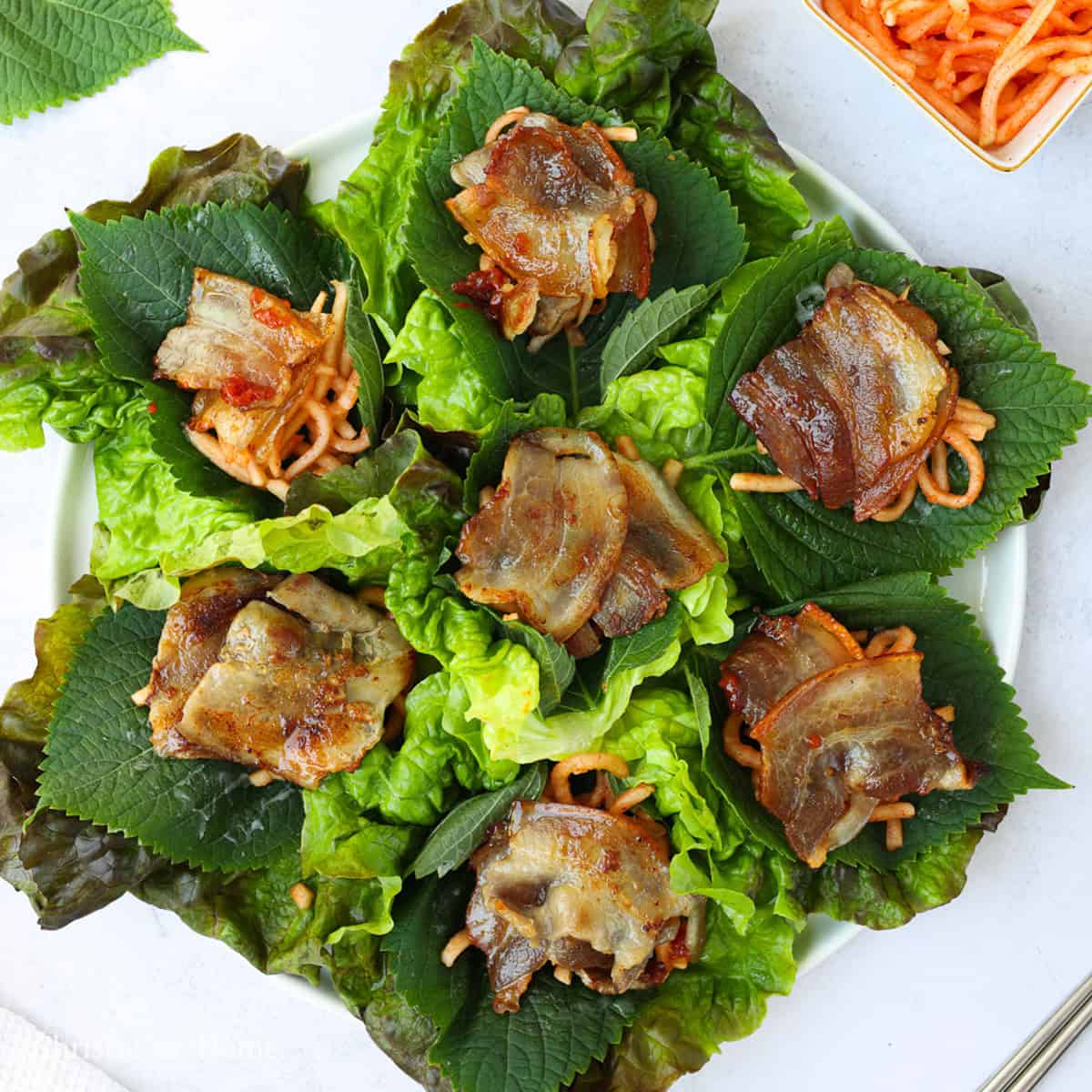
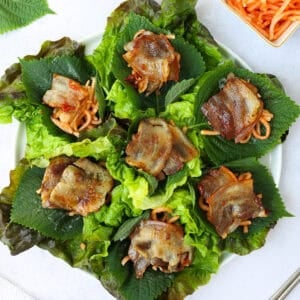
Juicy, tender pork belly wrapped in crisp lettuce and fragrant perilla leaves with savory ssamjang and tangy kimchi. These quick and easy Korean pork belly lettuce wraps are ready in just 15 minutes with only 5 ingredients! Perfect for a quick weeknight dinner or a Korean BBQ night at home without a tabletop grill.
Jump to:
Korean pork belly lettuce wraps are a popular way to enjoy samgyeopsal-gui (삼겹살구이), or Korean grilled pork belly, as ssam (Korean leaf wraps).
At Korean BBQ restaurants, the pork belly is typically grilled at the table, and people eat the meat as it cooks, wrapping each piece in fresh greens with ssamjang, kimchi, and other accompaniments. The wraps are traditionally enjoyed in one bite so all the flavors come together!
My husband and I love making these at home when we're craving Korean BBQ without the restaurant price. Instead of using a tabletop grill, I cook thinly sliced pork belly in a large nonstick pan until golden brown with slightly crispy edges. It's an easy way to enjoy Korean BBQ at home without the extra equipment.

Ingredients & Substitutes
Exact ingredient measurements are in the recipe card below. You can find the Korean ingredients at Asian or Korean grocery stores.
- Thinly Sliced Pork Belly - Use boneless pork belly sliced ¼ to ½ inch thick. I recommend buying pre-sliced pork belly for convenience. This is the key ingredient, so no substitutes here.
- Red Leaf Lettuce - Choose fresh, flexible leaves that are large enough to wrap around the filling. Their refreshing crunch balances the rich pork belly. Green leaf or butter lettuce also works, or use the tender inner leaves of romaine.
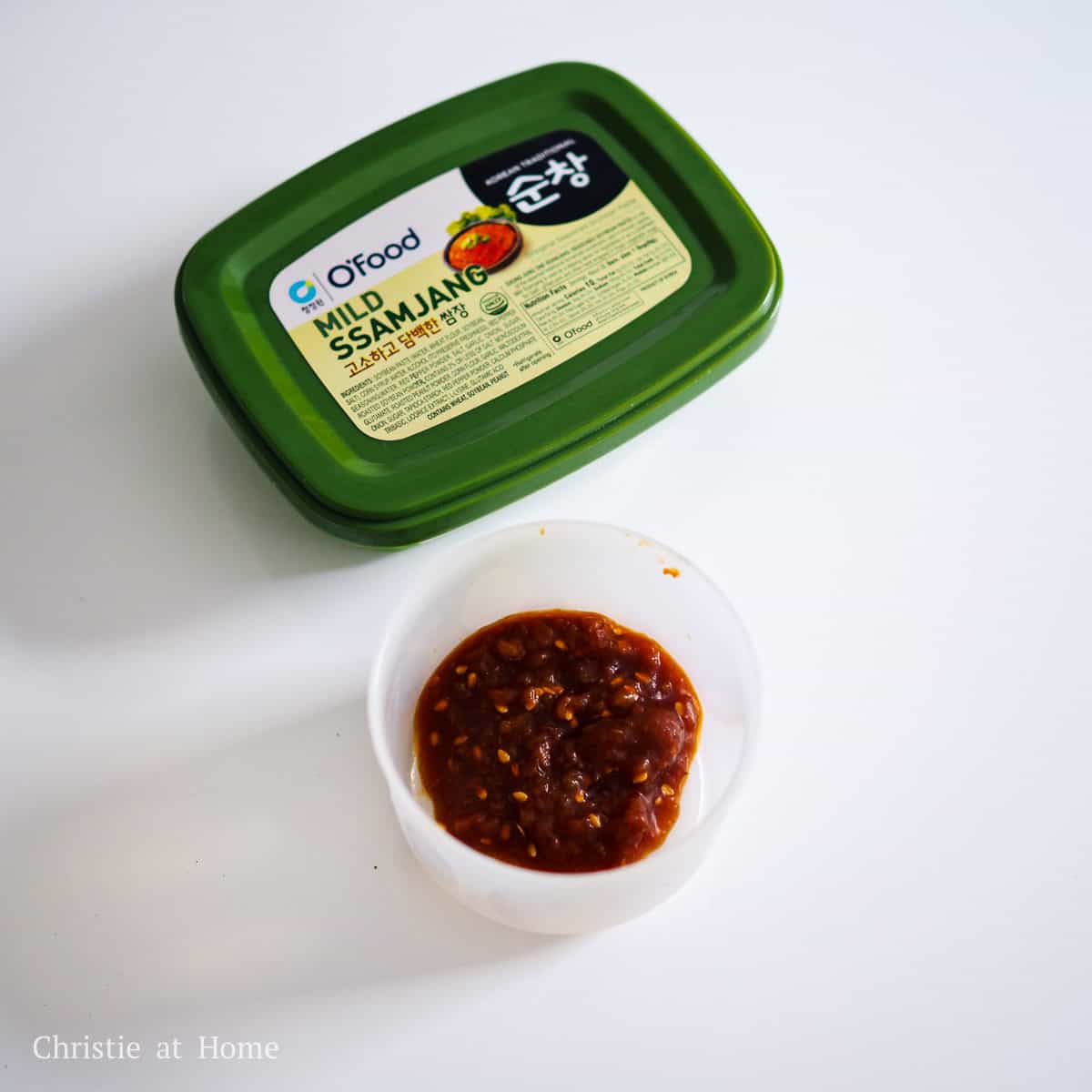
- Ssamjang - A savory, mildly spicy Korean dipping paste made with fermented soybean paste (doenjang), gochujang, and seasonings. Its salty, fermented flavor complements the rich pork belly and brings the wrap together. Look for it in green rectangular tubs and choose a mild variety if you prefer less heat. Gochujang works in a pinch, but it's sweeter, spicier, and less savory.
- Fresh Perilla Leaves - Also called kkaennip, these fragrant Korean leaves are broad and heart-shaped, with pointed tips and serrated edges. They have a distinctive herbal flavor that complements the rich pork belly.
- Kimchi - Choose either radish kimchi (kkakdugi) for a firm, crunchy bite or napa cabbage kimchi for a softer texture that's easier to fold into the wraps. Both add tanginess that balances the rich pork belly. I recommend pre-cut napa cabbage kimchi (mat kimchi) for convenience.
Expert Tips
- Cook the pork belly in batches if needed, leaving space between the pieces so they brown instead of steaming.
- Adjust the cooking time to your preference. Cook the pork belly just until fully cooked for a tender bite, or a little longer until the fat renders and the edges turn golden brown for a crispy texture.
- Dry the lettuce and perilla leaves thoroughly after washing so excess water doesn't dilute the ssamjang or make the wraps soggy.
- Serve the pork belly promptly after cooking so the fat stays soft and the meat stays warm. If frying in batches, loosely cover tender pork belly with foil, but leave crispy pieces uncovered to preserve their texture.
- Assemble the wraps just before eating to keep the greens crisp and the pork belly warm. Fold each wrap small enough to enjoy in one bite.
Instructions
How to make Korean pork belly lettuce wraps:
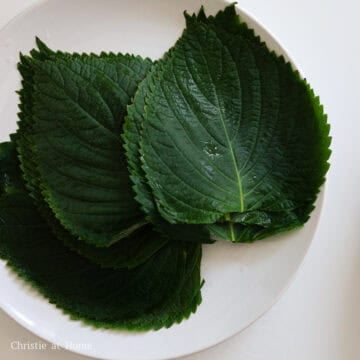
- Prepare the greens: Stack 20 perilla leaves and trim off the stems together. Separate 20 lettuce leaves. Wash the perilla and lettuce leaves separately, shake off excess water, and pat dry with paper towels. Arrange them separately on a large serving plate.

- Prepare the accompaniments: Transfer the ssamjang and your choice of kimchi into separate serving dishes. Set everything on the dining table so the wraps are ready to assemble.

- Cut the pork belly: Cut the pork belly strips into pieces about 2.5 inches long, aiming for 20 pieces total.

- Pan-fry the pork belly: Heat a large nonstick pan over medium heat. Add the pork belly in a single layer, frying in batches if needed. Cook until fully cooked through, golden brown, and slightly crispy around the edges, flipping occasionally. Transfer to a large serving plate.
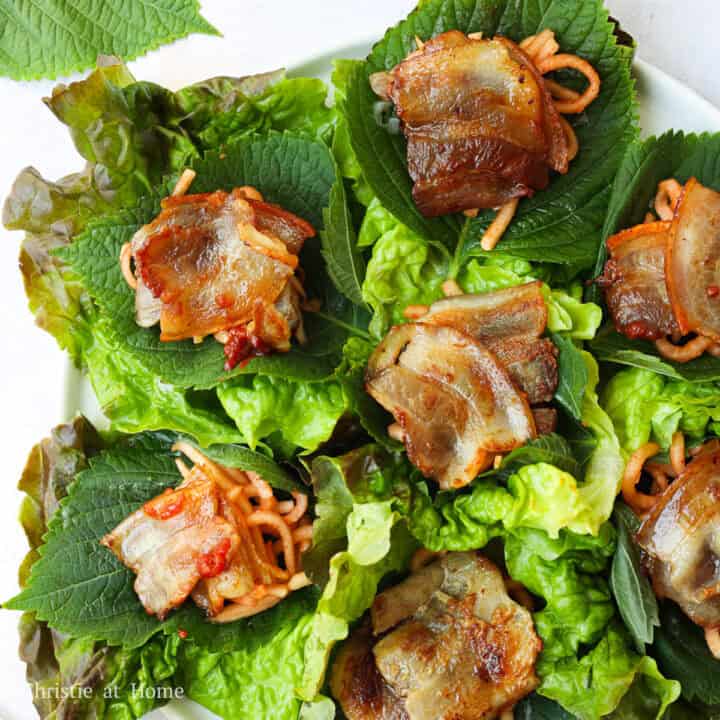
- Assemble the wraps: Place a perilla leaf inside a lettuce leaf. Spread up to ½ tablespoon of ssamjang over the perilla leaf, adjusting to taste. Then add your choice of kimchi and a piece of cooked pork belly. Fold the leaves around the filling and enjoy immediately!
Storage & Reheating
- Refrigerator: Store leftover cooked pork belly in an airtight container in the fridge for up to 3-4 days. Keep the lettuce, perilla leaves, ssamjang, and kimchi in separate containers to maintain their freshness.
- Not Recommended for Freezing: Avoid freezing assembled wraps because the greens become soggy when thawed. Cooked pork belly can be frozen separately in an airtight container for up to 2-3 months for best quality.
- Reheating: Reheat the pork belly in a frying pan over medium heat for 2-3 minutes, flipping occasionally, until heated through. Alternatively, microwave in 30-second intervals until hot. Assemble the wraps with fresh greens and the remaining condiments just before serving.
Pairing Suggestions
Serve Korean pork belly lettuce wraps with:
- Steamed White Rice - A simple, fluffy side that balances the savory pork belly and spicy ssamjang.
- Korean Rolled Omelette (Gyeran Mari) - A savory, tender egg dish that complements the rich pork belly.
- Korean Soybean Sprout Salad (Kongnamul Muchim) - A light, crunchy side dish that adds freshness to the meal.
FAQ
Yes! You can omit the perilla leaves and wrap the pork belly, ssamjang, and kimchi directly in lettuce. The wraps will still taste delicious, but you'll miss the distinctive herbal flavor of perilla.
Absolutely! Grill the pork belly over medium heat, turning occasionally, until fully cooked. For crispy edges, cook a little longer until the fat renders and the pork turns golden brown.
More Like This
Check out my other Korean recipes:
📖 Recipe
15-Minute Easy Korean Pork Belly Lettuce Wraps

Ingredients
- ½ lb pork belly sliced ¼ to ½ inch thick
- 2 heads red leaf lettuce (or use green leaf or butter lettuce)
- 20 perilla leaves
- ½ cup + 2 tbsp ssamjang
- 1 cup kimchi (use radish or pre-cut napa cabbage kimchi)
Instructions
- Stack 20 perilla leaves and trim off the stems together. Separate 20 lettuce leaves. Wash the perilla and lettuce leaves separately, shake off excess water, and pat dry with paper towels. Arrange them separately on a large serving plate.
- Transfer the ssamjang and your choice of kimchi into separate serving dishes. Set everything on the dining table so the wraps are ready to assemble.
- Cut the pork belly strips into pieces about 2.5 inches long, aiming for 20 pieces total.
- Heat a large nonstick pan over medium heat. Add the pork belly in a single layer, frying in batches if needed. Cook until fully cooked through, golden brown, and slightly crispy around the edges, flipping occasionally. Transfer to a large serving plate.
- Place a perilla leaf inside a lettuce leaf. Spread up to ½ tablespoon of ssamjang over the perilla leaf, adjusting to taste. Then add your choice of kimchi and a piece of cooked pork belly. Fold the leaves around the filling and enjoy immediately!


Kate
Dumb question, but is it 66 calories per wrap? 🙂 I notice some recipes say servings as *number* wraps and such. Thanks!
christieathome
Not a dumb question at all! Yes it's 66 calories per wrap 🙂
Lily
Is there anything I can use as a substitute for the Ssamjang? I do not have a Korean or Chinese grocery anywhere near me. I do have gochujang and doenjang in my fridge right now, as well as a number of other Chinese and Korean condiments. No perilla leaves either, unfortunately, but I've prepped the pickled veg and I have leaf lettuce. Any suggestions would be very much appreciated. Thank you.
christieathome
Gochujang is a great substitute, but I would mix it with equal parts sesame oil, rice vinegar and honey and add more of each ingredient to taste. Hope this helps!
Heidi | The Frugal Girls
This looks so good. Pork belly is so rich and flavorful all by itself, but then the sauce and pickled radish you added really send the flavors over the top!