

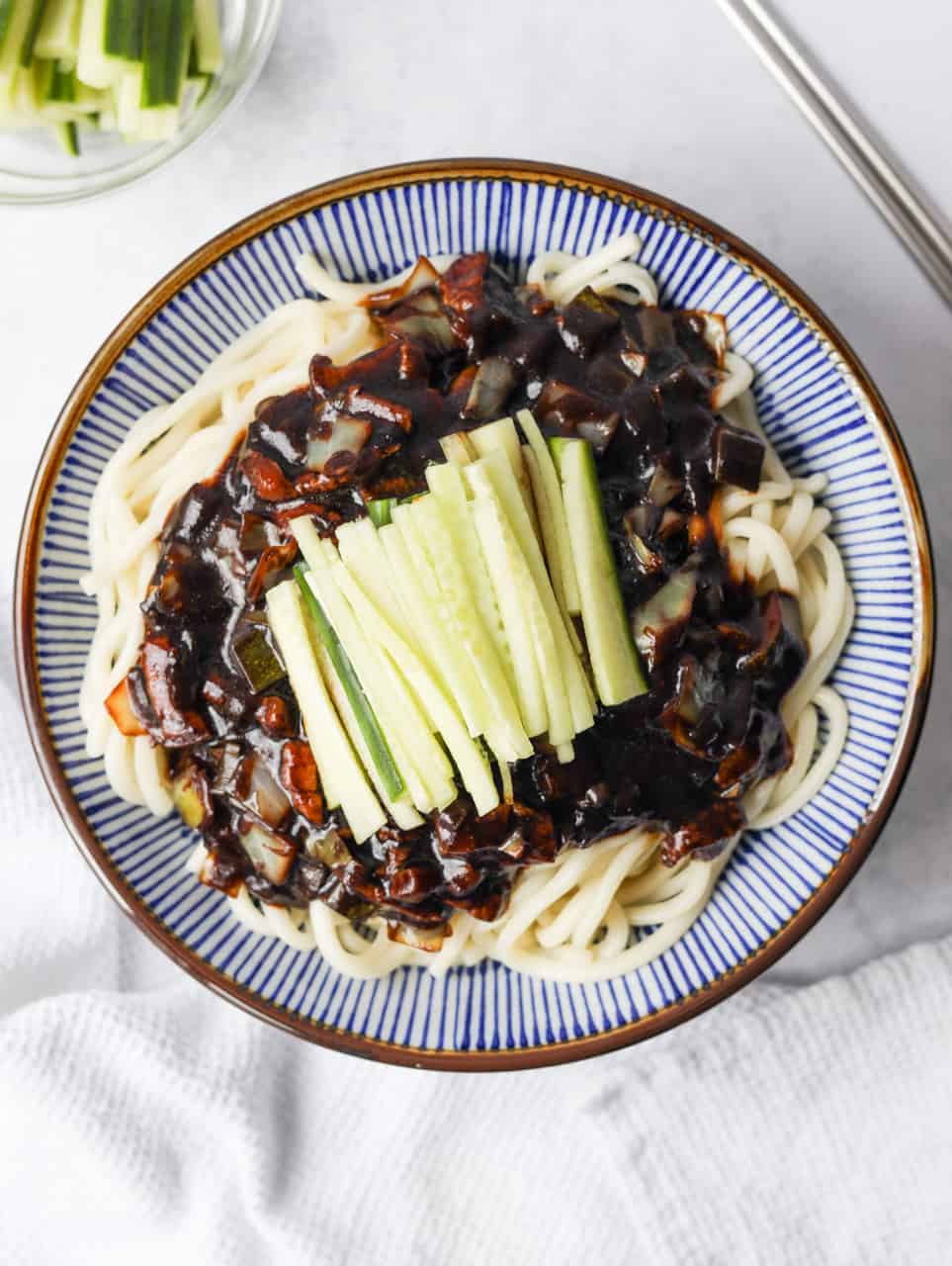
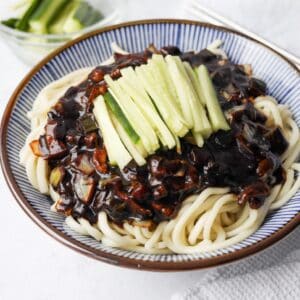
Thick, chewy wheat noodles in a savory black bean sauce loaded with pork belly, onions, cabbage, and zucchini, topped with crisp cucumbers. This easy Jajangmyeon recipe is ready in just 30 minutes, making it a family-friendly, better-than-takeout main that's great for busy weeknights!
Jump to:
What is Jajangmyeon?
Jajangmyeon (aka 'Jjajangmyeon' 자장면) is a popular Korean-Chinese noodle dish made with wheat noodles topped with a rich black bean sauce with pork belly, zucchini, cabbage, onions, and sometimes potatoes.
These black bean noodles are served at Korean restaurants with fresh cucumbers or pickled daikon radish to balance the salty flavors. Koreans often enjoy it with crispy, juicy tangsuyuk (aka 'Korean Sweet and Sour Pork').
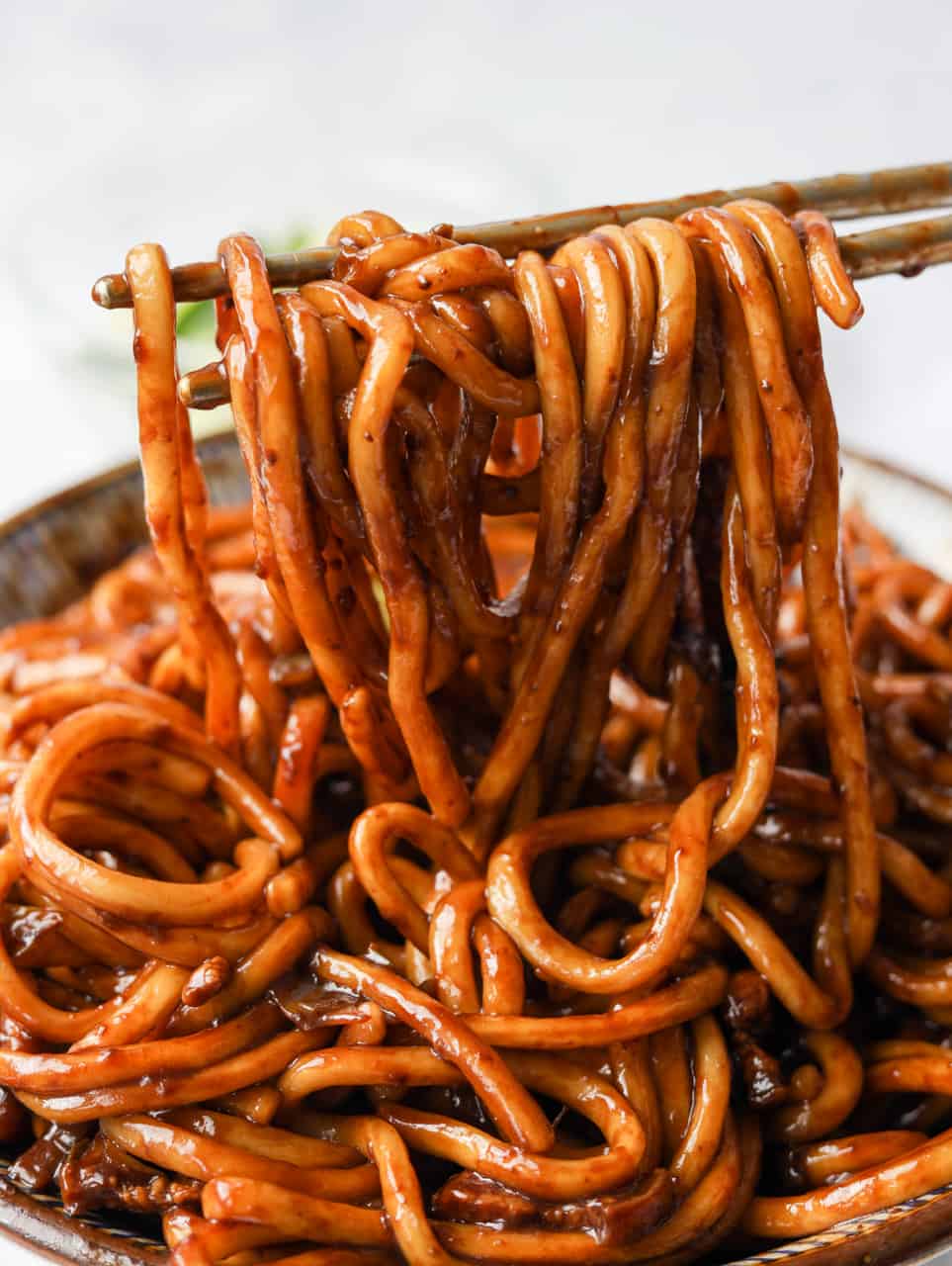
What gives the noodle sauce that dark color is Chunjang, a Korean black bean paste made of fermented soybeans, caramel, and flour. It's often used in Korean cuisine for its salty flavor.
In South Korea, this noodle dish is usually eaten to celebrate a special occasion, like graduation or birthdays. For me, this is comfort food and I can never get enough of these noodles!
What sets my recipe apart is that you can swap the pork belly for another protein - see Variations below.
Ingredients & Substitutes
Please scroll down to the recipe card below for exact measurements.
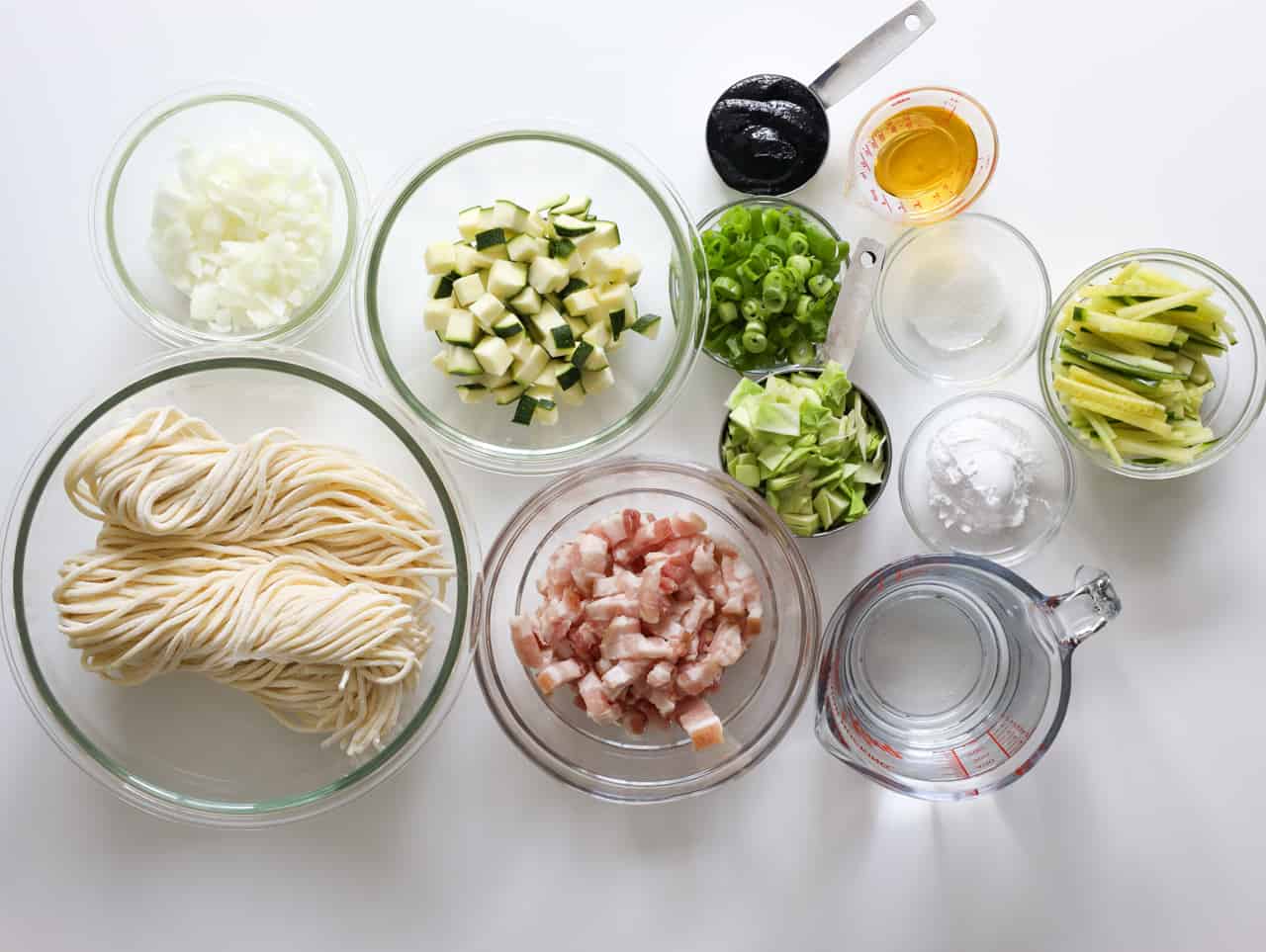
- Fresh Korean Wheat Noodles: These are thick white wheat noodles available at the Korean market in the cold section. Or substitute with fresh kalguksu noodles, udon noodles, or dry wheat noodles and prepare according to package directions.
- Pork Belly: Or replace with ground pork or sliced pork shoulder. Avoid using bacon as it's too salty.
- Chunjang: This is a Korean black bean paste available at any Korean market. Or substitute with Chinese black bean paste and add less oyster sauce to taste.
- Neutral Oil: Use a neutral oil like avocado, sunflower, grapeseed, peanut, vegetable, or canola oil. Avoid using olive oil or any low-smoke-point oil.
- Onion: Or substitute with 2 small shallots.
- Green Cabbage: Avoid substituting with napa cabbage as it can release water, diluting the sauce.
- Zucchini: Both green and yellow squash work.
- Green Onion
- Oyster Sauce: Or substitute with vegetarian stir-fry sauce.
- Cold Water
- Cornstarch: Or substitute with potato starch or tapioca starch to thicken the sauce.
- White Granulated Sugar: Or substitute with cane sugar, to balance the salty flavors.
- Cucumber (optional garnish): Or serve with yellow pickled daikon radish.
Note: Asian ingredients are typically available at most Korean and Asian grocery stores or check online.
Variations
- Chicken version - Replace the pork with ground chicken or sliced chicken thighs.
- Beef version - Replace the pork with ground beef or sliced beef.
- Vegetarian version - Replace the pork with diced extra-firm tofu and replace the oyster sauce with vegetarian stir-fry sauce.
- Gluten-free version - Use gluten-free udon noodles, gluten-free oyster sauce, and gluten-free chunjang, available online.
- Spicy version - Season the thickened sauce with gochugaru to taste.
Expert Tips
- Use a large non-stick pan to prevent the paste from sticking to it.
- Fry the black bean sauce in enough oil - this reduces the bitter taste and makes it smooth, glossy, and less sticky.
- Fry the pork until it releases its fat, letting the rendered oil flavor the sauce.
- Thicken the sauce by simmering it uncovered until it reduces.
- Boil noodles after the sauce is cooked or the noodles will be soggy if you boil ahead of time.
- Boil the noodles until al dente and taste test them - I like to undercook them by 1 minute less than the package directions.
- Don't rinse the noodles with cold water or it will remove the wheat flavor.
- Strain the noodles well or any residual water will dilute the sauce and make the noodles soggy.
- Enjoy the dish immediately as the noodles will soften in the sauce over time.
Instructions
Below are step-by-step instructions on how to make jajangmyeon:

- Make cornstarch slurry: In a small bowl, combine sugar, cornstarch, and water. Mix until dissolved and set aside.
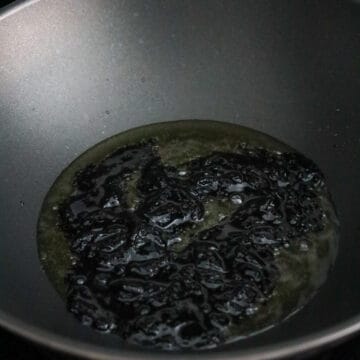
- Fry black bean paste: Heat oil in a large non-stick pan on medium heat. Fry the black bean paste for 2-3 minutes, stirring constantly. Transfer to a separate bowl, keeping 1 tablespoon of the oil in the pan. Strain off the excess oil in the bowl and reserve the black bean paste.
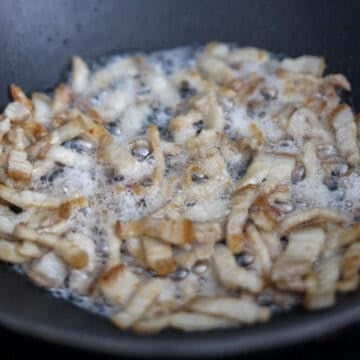
- Cook pork belly: Fry sliced pork belly in the same pan until cooked, browned on the edges and the fat releases. Don't pour out the fat.
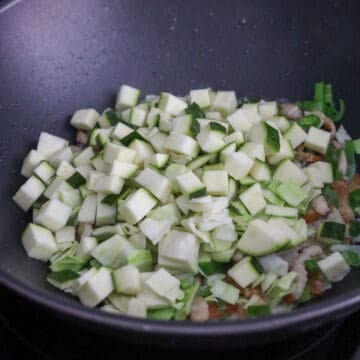
- Cook aromatics and veggies: Add onions and green onions and fry until softened. Then add zucchini and cabbage and fry until softened.
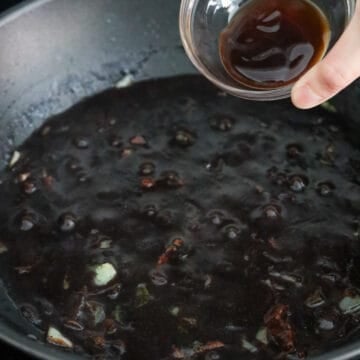
- Make the sauce: Mix in the black bean paste. Mix the cornstarch slurry and add to the pan. Stir to combine and simmer until thickened. Then season with oyster sauce.
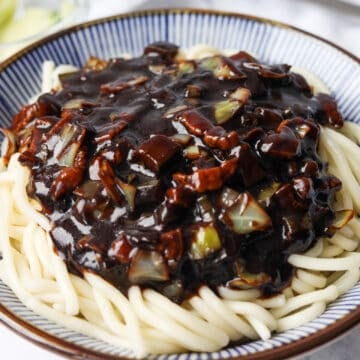
- Cook noodles and serve with sauce: In a separate pot, boil noodles in water on high heat until al dente, about 3-4 minutes and strain. Don't rinse with cold water. Transfer to a large serving bowl and pour the sauce on top. Garnish with julienned cucumber and mix to enjoy!
Storage & Reheating
- Jajangmyeon can last up to 4 days when stored in an airtight container in the fridge once cooled. To enjoy, reheat in the microwave or on the stovetop until hot throughout.
- I don't recommend freezing jajangmyeon as it will make the noodles and vegetables soggy.
Pairing Suggestions
Jajangmyeon pairs well with:
- Fried egg on top
- Yellow pickled daikon radish
- Kimchi
- Tangsuyuk (sweet and sour pork)
- Korean cucumber salad
- Beansprout salad
- Zucchini fritters
- Gamja jorim
- Korean spinach
- Japchae
- Gyeran mari
- Fish cake stir fry
- Chamchijeon (tuna pancakes)
FAQ
The sauce in jajangmyeon can be prepared in advance and I recommend preparing the noodles closer to serving time, to prevent soggy noodles. The sauce can be stored in an airtight container in the fridge for up to 4 days once cooled. To enjoy, reheat the sauce in the microwave or on the stovetop until heated through. Then boil the noodles as per the recipe and serve with the sauce.
Korean wheat noodles are fresh, white, thick and powdered with starch. They are sold at the Korean market in the cold section and look like the below image: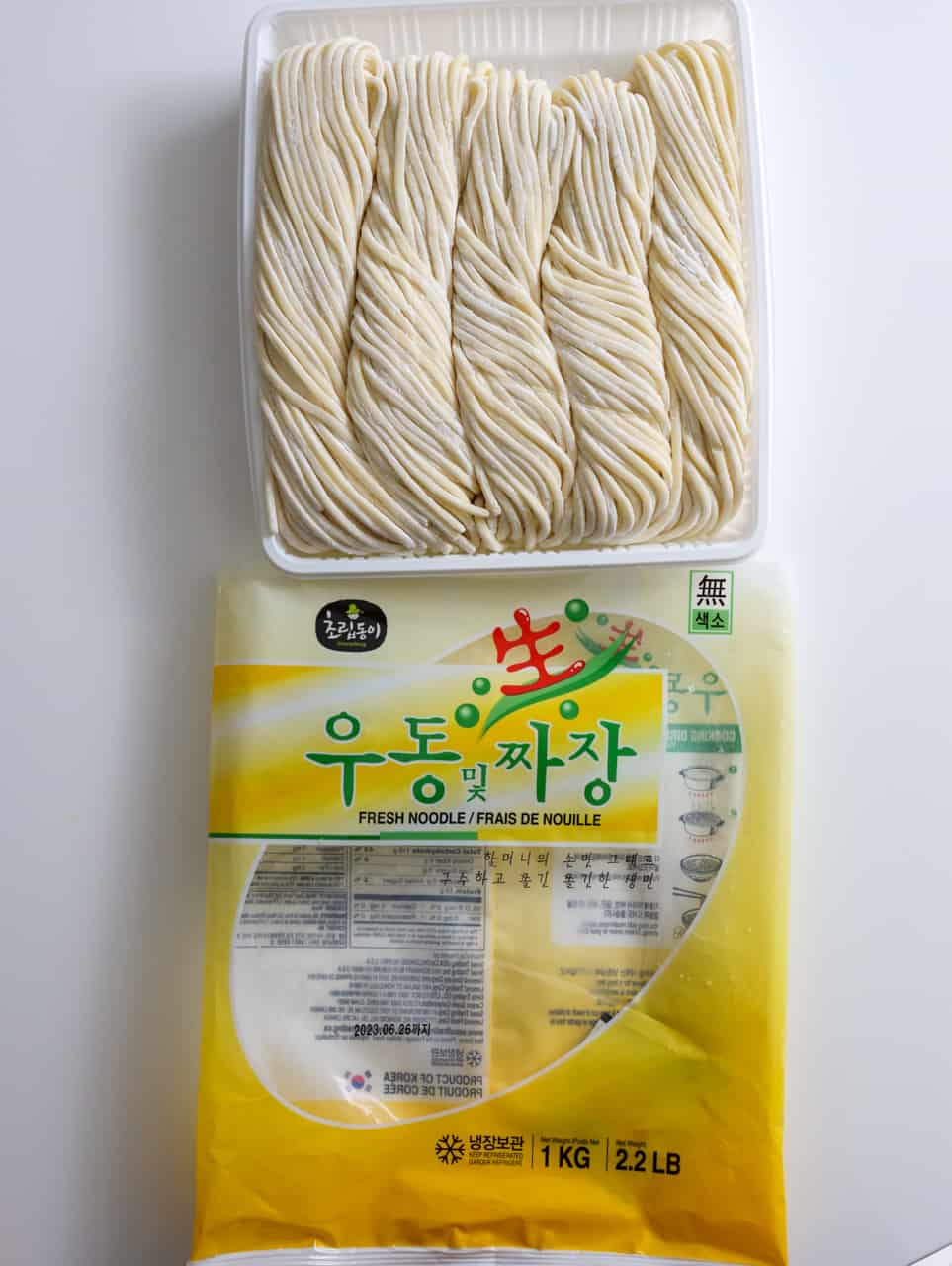
Feel free to add crunchy vegetables with a low-water content, like carrots or potatoes, and avoid using high-water content vegetables to prevent diluting the sauce.
More like this
📖 Recipe
Quick & Easy Jajangmyeon (Korean Black Bean Noodles)

Ingredients
- 1.20 lbs thick Korean wheat noodles fresh kind, or use udon noodles prepared to package directions
- 0.65 lbs pork belly chopped into ½-inch wide pieces
- 1 small onion finely diced
- 1 cup green cabbage chopped
- 1 cup zucchini small diced
- 2 green onion finely chopped
- ⅓ cup Korean roasted black bean paste aka Chunjang
- 3 tablespoon vegetable oil any neutral oil
- 1 tablespoon oyster sauce or vegetarian stir-fry sauce
- ¾ cup cucumber julienned, optional garnish
Cornstarch slurry:
- 2 cups water cold
- 2 tablespoon cornstarch or potato starch
- 2 tablespoon white granulated sugar
Instructions
- In a small bowl, combine sugar, cornstarch, and water. Mix until dissolved and set aside.
- Heat oil in a large non-stick pan on medium heat. Fry the black bean paste for 2-3 minutes, stirring constantly. Transfer to a separate bowl, keeping 1 tablespoon (15 ml) of the oil in the pan. Strain off the excess oil in the bowl and reserve the black bean paste.
- Fry sliced pork belly in the same pan until cooked, browned on the edges and the fat releases. Don't pour out the fat.
- Add onions and green onions and fry until softened. Then add zucchini and cabbage and fry until softened.
- Mix in the black bean paste. Mix the cornstarch slurry and add to the pan. Stir to combine and simmer until thickened. Then season with oyster sauce.
- In a separate pot, boil noodles in water on high heat until al dente, about 3-4 minutes and strain. Don't rinse with cold water. Transfer to a large serving bowl and pour the sauce on top. Garnish with julienned cucumber and mix to enjoy!


Xp
Just a question, can you freeze the sauce without the vegetables?
Christie Lai
Yes, that would work! A fine sieve will help strain out the vegetables so you're left with the sauce to freeze.
AliceK
This recipe looks wonderful! I do have a question about the pork belly. It isn't easy to find in my area. I know that it is the same cut that is used for making bacon. Could I substitute bacon, or just use a fatty piece of boneless pork?
christieathome
Thanks so much Alice! Yes, feel free to substitute with pork loin, pork shoulder or ground pork/beef.
Kathryn
Do you need to add cornstarch?
christieathome
Sorry for the delayed reply! Yes, it's needed to help thicken the sauce.
Kerrie
Thank you so much! You are a life-saver! Every single recipe for this says boil noodles per instructions on the package. My package doesn't have any english except for an ingredient sticker. Without your recipe I was going to have to check the noodles every minute until they were done. Thanks again!!
christieathome
Thank you so much for making my recipe Kerrie! Glad I could help with these instructions 🙂
Never Ending Journeys
What a delicious noodle dish! I like the idea of putting the black beans on top, too!
Heidi | The Frugal Girls
I really liked your idea to use chicken as the protein. That really allows the yummy flavors of your sauce to come through! 😋
Safia
Loved all the historical facts behind this recipe and your own feelings. The metric measurements helped massively as well as the tips. Thumbs up from me!!!
Christie Lai
Thanks so much for your kind words, Safia! So glad I could share the background and my personal experience with this dish 🙂 Also glad the metric conversion tool has been helpful.
Vivian Wan
Finally my determination to get all the ingredients did not fail me. Made this and it was a hit! I used pork belly instead of chicken and it was so delicious. Definitely satisfied my jajangmyeon craving
christieathome
Thanks so much for your kind review Vivian! I'm so glad you enjoyed this recipe and having it with pork belly is such a delicious decision! 🙂 Thanks again!
Josiah - DIY Thrill
These noodles look so delicious!
Molly
These noodles were SOOOO BOMB!!! I tried it and it was so easy to make too.